Fire Control
Our Capability
Protecting Communities Across Australian & Worldwide
McDermott Aviation is Australia’s largest privately owned aerial firefighting operator, bringing more than two decades of proven experience in aerial firefighting. The company supports leading fire agencies across all Australian states, as well as major private forestry operators.
We hold multiple NAFC aerial firefighting contracts in Australia and have deployed internationally to Canada, the United States, and Europe. Our fleet, engineering capability and field support systems enable rapid mobilisation, sustained operations and high-volume water delivery in some of the world’s most challenging fire environments.
Why Use a Helicopter?
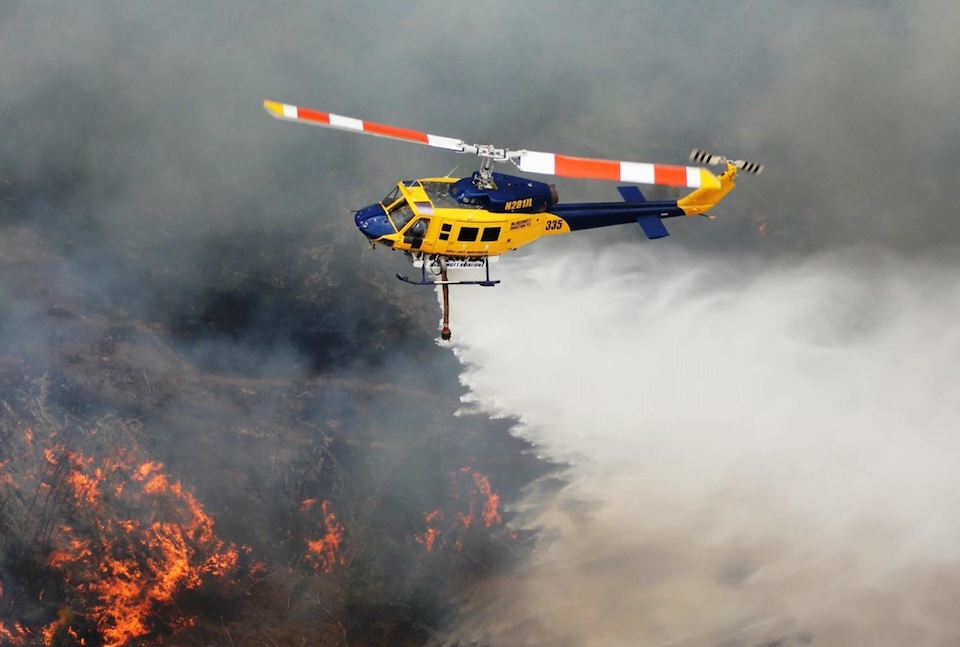
Minimal setup time
Access where trucks can’t operate
High tempo operations
No ground footprint
Rapid mobilisation
Cost-effective for deployment
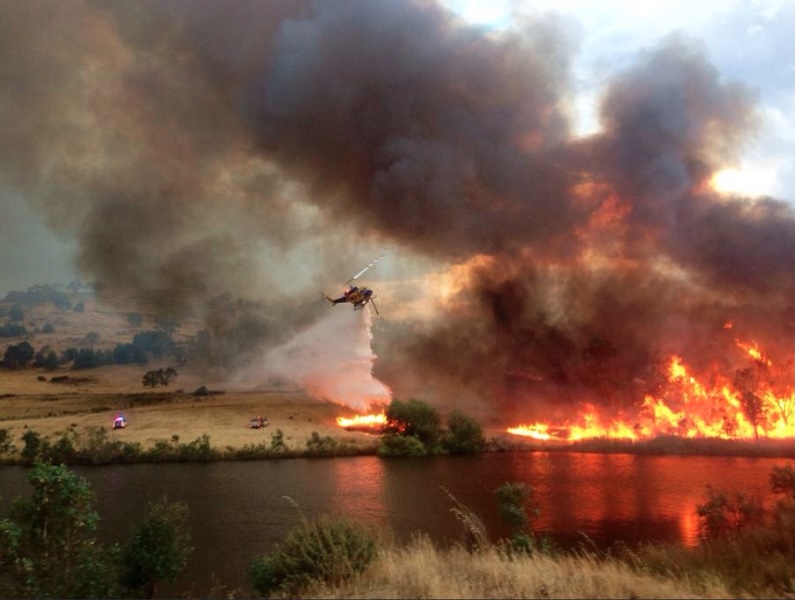
Water Bombing
Aerial Fire Fighting
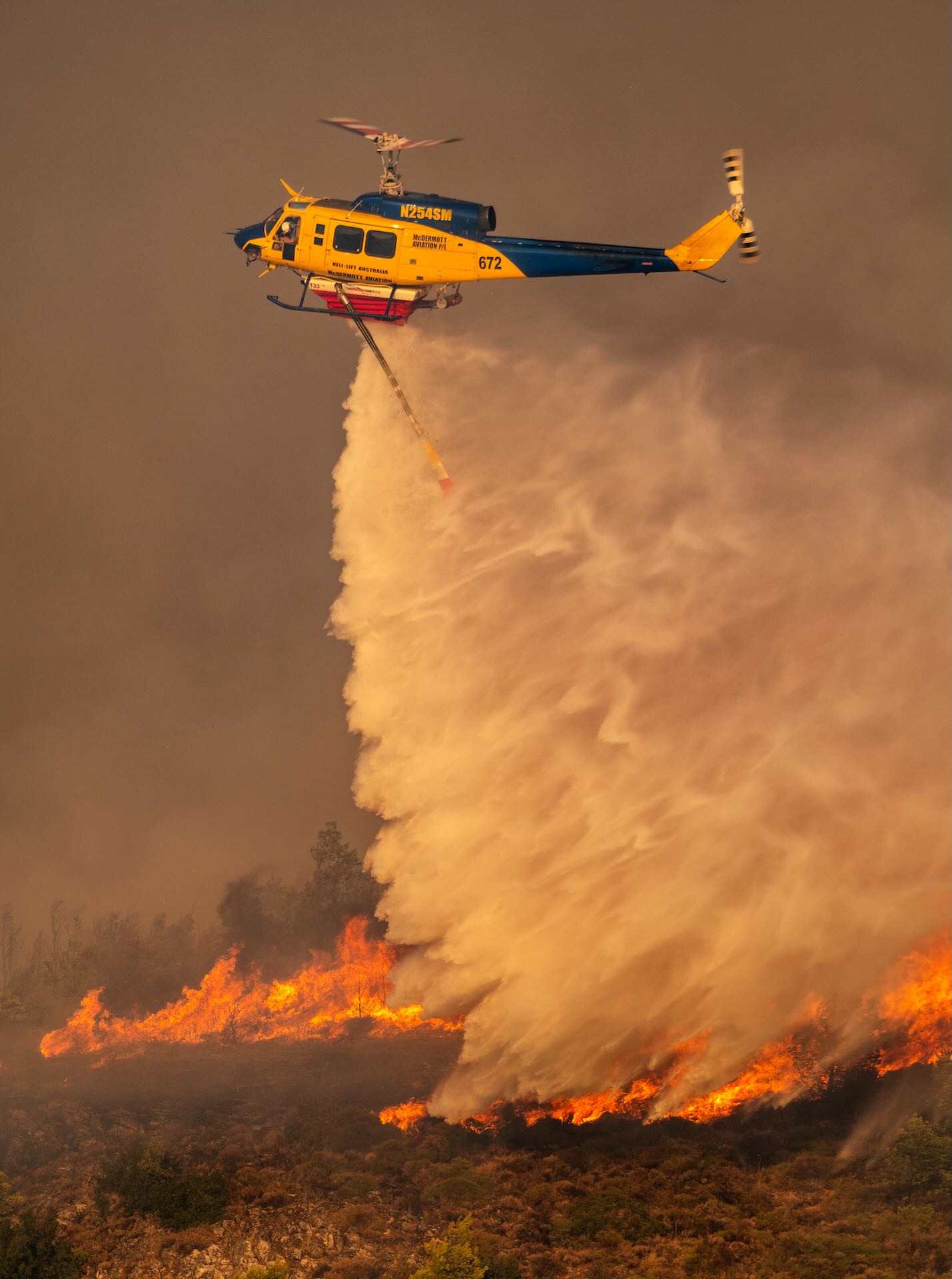
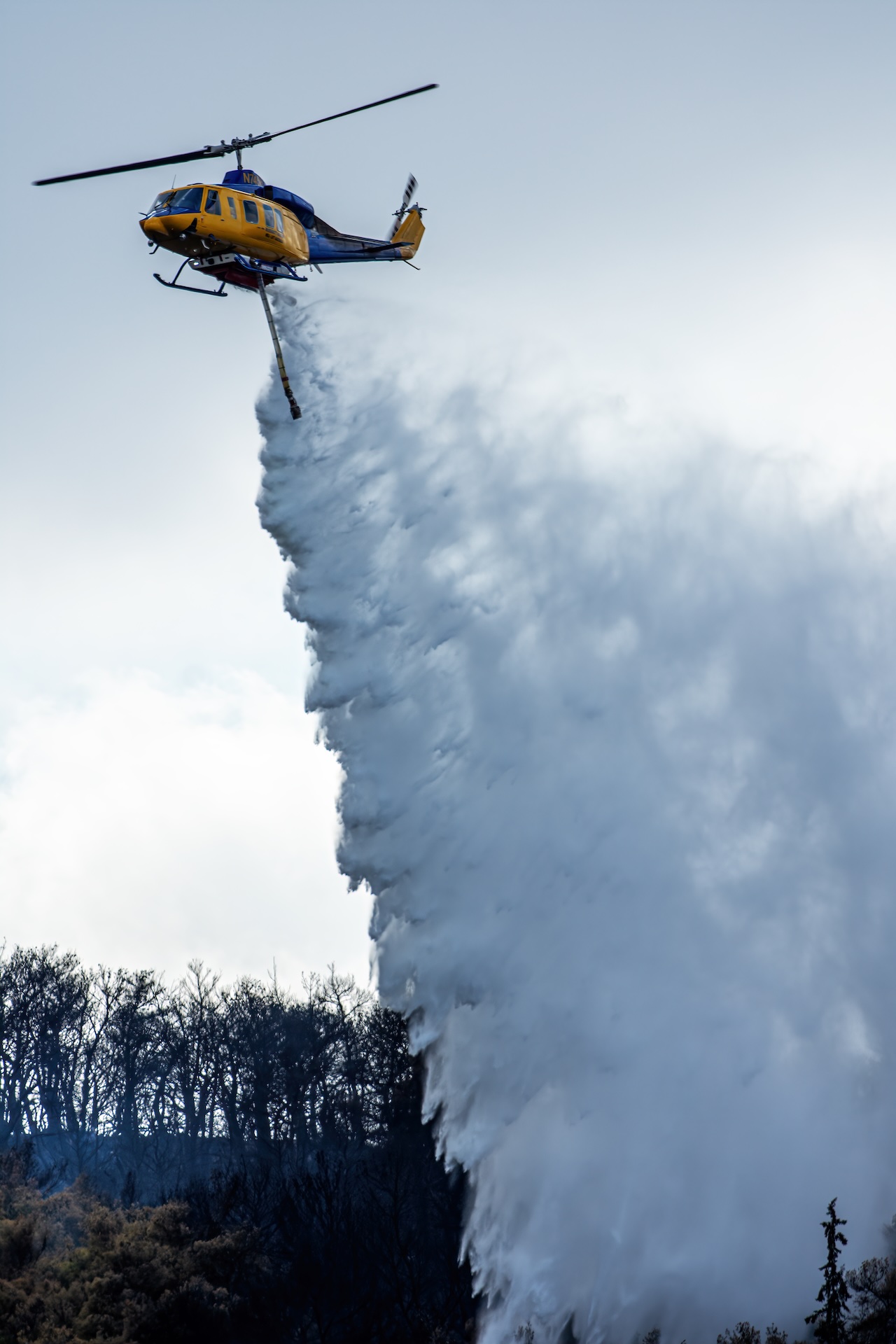
McDermott Aviation is at the forefront of innovation in aerial firefighting, with a proven track record of designing, developing and deploying advanced water bombing systems that enhance operational efficiency and fireground effectiveness.
In partnership with Isolair USA, McDermott Aviation co-developed and manufactures the “Tsunami” tank for the Bell 214B — one of the highest-capacity helicopter tanks available at 2,600 litres. The company has also collaborated with Helitak to develop the FT3500 tank system, equipping both the 214ST and B models with industry-leading capability.
Key features of our tank systems include:
- Open water filling systems enabling access to both fresh and salt water sources
- Integrated foam and gel injection with pilot-controlled mix ratios
- High-volume Kawak snorkel pumps (214 series: 75 L/s, 204: 35 L/s) for rapid hover filling
- Flexible drop configurations, including full and partial load release
- Precise pilot-controlled dump volume and drop length
- GPS-enabled logging for water source verification and drop tracking
In addition, McDermott Aviation operates underslung bucket systems up to 3,400 litres, including multi-drop, self-filling configurations compatible with a range of long-line operations.
This in-house engineering capability and commitment to continuous improvement ensures McDermott Aviation remains at the leading edge of aerial firefighting technology.
During recent Australian fire seasons, McDermott Aviation aircraft have regularly flown up to 10-hour operational days, with all scheduled and unscheduled maintenance undertaken after hours to maintain full fleet availability each morning.
Air Attack
Aerial Supervision and Coordination
McDermott Aviation provides aerial supervision and Air Attack support, coordinating aerial assets on active firegrounds and maintaining real-time communication with incident controllers and ground crews. Air Attack roles include fire mapping, containment planning, aerial coordination and tactical direction of suppression aircraft.
Support
Self-sufficient Operations
Our firefighting capability is underpinned by a fully self-sufficient operational support system that allows us to deploy rapidly and operate independently in remote or high-tempo environments.
Our support infrastructure includes:
- A large multi-type fleet with operational redundancy across platforms
- Extensive spare parts inventory for high availability
- Experienced field engineers and specialist trades (sheet metal, avionics, electrical)
- A dedicated stores and logistics team operating nationally and internationally
- 13 refuelling vehicles (2,400 L to 35,000 L capacity)
- 7 engineering service vans for on-site maintenance
- Access to fixed-wing aircraft for rapid crew and parts movement
- A workforce with decades of practical experience in high-risk firefighting environments
This high level of operational independence ensures consistent aircraft availability, rapid turnaround times and safe, reliable performance across all missions.
Which Aircraft Do I Need?
Different missions require different aircraft performance profiles. Our fleet allows us to match the right platform to each task, ensuring the safest, most efficient and most operationally effective outcome.